


Northern Uganda: NEMA moves to tighten chemical controls amid Gulu asbestos alarms and impending oil era
 Frank Oyugi
By Frank Oyugi
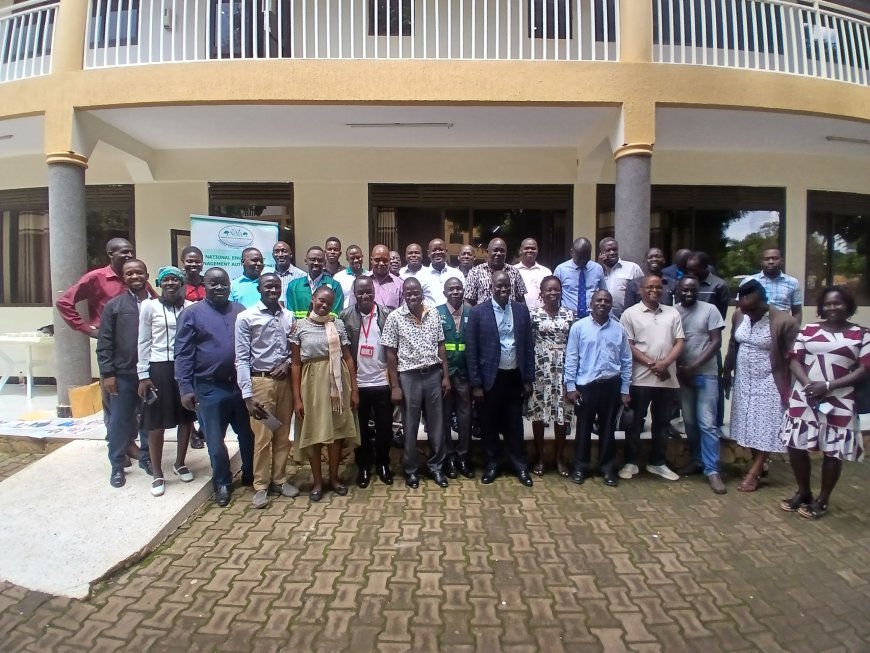
LIRA CITY 21-05-2026 — The National Environment Management Authority (NEMA) has concluded a two-day intensive sensitization workshop in Lira City, aimed at training local leaders, civil society organizations, the media, and factory owners on the management of hazardous substances ahead of the enforcement of strict new environmental laws.
The workshop, which took place yesterday and Thursday (today) at Margarita Hotel in Lira City, drew a diverse group of participants from Gulu City and various districts within the Lango sub-region.
The initiative aligns with NEMA’s mandate to regulate toxic substances and ensure that industrial operators, vendors, and educational institutions prevent chemical contamination of the ecosystem. The drive comes as Uganda prepares to operationalize the National Environment (Management of Hazardous and Products Containing Hazardous Chemicals) Regulations. While drafted in 2024, these regulations are slated for full enforcement across the country soon.
The National Environment (Management of Hazardous Chemicals and Products Containing Hazardous Chemicals) Regulations, 2024 (Statutory Instrument No. 13 of 2024) establish a strict legal framework under the National Environment Act, 2019, to oversee the entire life cycle of toxic substances in Uganda—from importation and manufacturing to storage and disposal. Specifically targeting high-risk elements like mercury, lead, cyanide, and persistent organic pollutants (POPs), the regulations mandate the creation of a National Chemical Register and require industries to fully disclose their chemical usage and waste volumes. Crucially for local enforcement, the law empowers authorities to inspect industrial facilities and utilizes accredited laboratories to test for environmental contamination, meaning that factories denying access to inspectors are in direct violation of the law.
Proactive Safety and the "Bunding" Requirement
Andrew Othieno, the Manager of the Standards Committee at the Uganda National Bureau of Standards (UNBS), led the technical information sessions during the two-day workshop. According to Othieno, under the upcoming legal framework, strict reporting and containment mechanisms will be mandatory for all chemical supply chain actors.
"Whether an individual or entity intends to manufacture, import, export, or purchase hazardous chemicals for local use, they must formally notify NEMA," Othieno clarified.
He emphasized that NEMA must be furnished with comprehensive data, including chemical compositions, commercial names, and potential toxicological impacts on human health and the environment. Furthermore, vehicles transporting these hazardous materials must display clear, standardized safety signage.
Othieno cautioned against the illegal dumping or accidental spilling of chemicals into water bodies and soil. To prevent catastrophic night-time leaks when facilities are unstaffed, he revealed that the new regulations will focus heavily on mandatory emergency infrastructure, such as bunding.
"Have you put in place bunding—a wall around the tank—so that if it leaks, that chemical is contained within that walled area?" Othieno challenged factory owners in attendance. "Emergency preparedness and response must be covered, even for when you are going to shut down your manufacturing facility."
The health implications of regulatory non-compliance are already visible. Othieno pointed out that chemical pollution is directly linked to the rising burden of non-communicable diseases in Uganda. He noted that a significant number of patients currently admitted to the Mulago National Referral Hospital's Cancer Institute suffer from ailments traceable to prolonged chemical exposure and environmental toxicity.
Gulu City Raises Alarm Over Hydropower Chemicals and Asbestos Poisoning
The workshop highlighted severe gaps in how regional districts handle toxic materials. A representative from Gulu City raised pressing environmental concerns regarding how specialized, large-scale industrial chemicals are managed in the region.
The representative revealed that large volumes of heavy industrial chemicals intended for major infrastructure projects—specifically mentioning the Achwa Hydro Power Plant—regularly pass through or are brought directly into the Gulu City center.
"Normally they come to the district... I don't know whether they just don't know what to do, but they always come to the district and say, 'We want clearance.' Can you clear us, like the environment officer will give us a letter?" the Gulu representative explained, highlighting local bureaucratic confusion. "Somewhere, somehow, we get stuck on how to handle them."
In addition to industrial power plant chemicals, Gulu City officials expressed deep worry over the high volume of community members and institutions handling highly hazardous asbestos roofing sheets. Asbestos is a known carcinogen linked directly to aggressive lung cancers.
According to the representative, when local homeowners or large institutions decide to replace their aging asbestos roofs, they routinely handle the waste with reckless disregard for safety.
"Normally, when they want to replace their roofs, they just pick those things. Sometimes they just give it to other people who maybe want to construct latrines and the like," the representative stated.
While a few informed citizens visit district offices seeking professional advice on handling asbestos waste, local environment officers lack clear disposal pathways. This crisis extends to major health facilities; the representative revealed that even St. Mary's Hospital Lacor (Lacor Hospital) recently approached authorities seeking immediate help and guidance on how to safely dispose of massive quantities of decommissioned asbestos roofing materials. The representative formally petitioned NEMA to provide concrete, structural guidelines on how district officers can safely isolate, transport, and bury asbestos waste to protect public health.
Local Enforcement Hurdles and Resistance in Lira
Similar enforcement friction was reported in the Lango sub-region. James Okola, an Entomologist and with the Lira District Local Government, revealed that local authorities are currently investigating several cases of chemical smuggling and non-compliance.
Okola raised concerns to NEMA regarding agrochemical inputs widely circulating in the market, noting that many are handled carelessly by both traders and end-users. He noted that while robust regulations look excellent on paper, they are useless without uniform field execution.
"We may have a very good regulation, but with a very weak enforcement, nothing good will be realized," Okola lamented. "If you look at the industries we have—quite a number of agro-industries that are majorly agro-based—to access their facilities is a tug of war."
In response to these multi-district enforcement hurdles, Monica Angom, a Senior Environmental Inspector from the NEMA headquarters in Kampala, clarified to the gathered local leaders and factory owners that businesses have no legal right to bar state inspectors from their facilities. She stated that the National Environment Act grants NEMA inspectors unconditional powers to enter and inspect any industrial site, machinery, or warehouse to audit chemical safety measures.
"That is your power, and by virtue of that, you have the legal right to access [the facilities]," Angom stated, addressing local inspectors and leaders. "And when denied access, you have the powers to go ahead and prosecute... the law is very clear."
Angom assured local officials that the regional offices, backed directly by the central NEMA headquarters in Kampala, stand ready to provide full enforcement, technical toolkits, and legal support to prosecute defiant factory owners.
The Broader Context: Chemical Safety, Oil, and Nuclear Development
The urgency of establishing robust chemical management frameworks is heightened by Uganda’s impending entry into major socio-economic and industrial sectors. Dr. Innocent Achaye, a chemical specialist and NEMA’s Manager of Chemical Safety, Radiation, and Pollution, explained to the participants that while chemicals are vital to modern industrialization, their management cannot be left to chance. He urged civil society and the media to help raise awareness so stakeholders take proactive measures to safeguard public health from toxic exposure.
Dr. Achaye announced a critical timeline: starting this July, Uganda is scheduled to commence commercial oil drilling operations within the Albertine Graben. The extraction phase is expected to significantly increase the volume of hazardous industrial chemicals and waste entering the country's ecosystem.
Furthermore, Dr. Achaye revealed that Uganda is expanding its scientific footprint with the construction of a powerful, first-of-its-kind Nuclear Research Facility in East Africa, located at Soroti University.
"Interaction with chemicals—some of which are radioactive in nature—is growing," Dr. Achaye stated, emphasizing the need for comprehensive lifecycle management. "We need to look at how we effectively manage them, from the time when we extract them, through the production processes, to the time when we utilize the products."
This highly advanced facility underscores the immediate need for NEMA's upcoming regulations, as managing the entire life cycle of both hazardous chemicals and radioactive elements is paramount to protecting the population and environment.
Local environmental activists and residents in Lira have already raised red flags over ongoing pollution, pointing out that some local property and factory owners are currently discharging untreated chemical waste directly into local water channels, such as the vital Okole wetland system. Local authorities have repeated that such practices will attract severe legal penalties once the new regulations come into effect.
For any comments reach out on 0751263616,0777776920 or frankygold22@gmail.com