

Cease Fire or Destroy the Legacy: A Final Warning to Lira University’s Leadership
 admin
admin
The Paradox of Our Pride
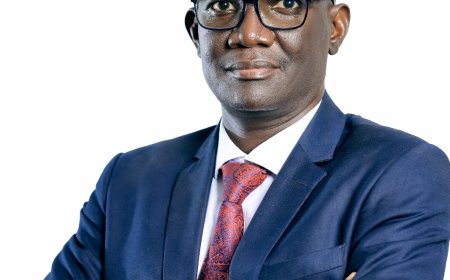
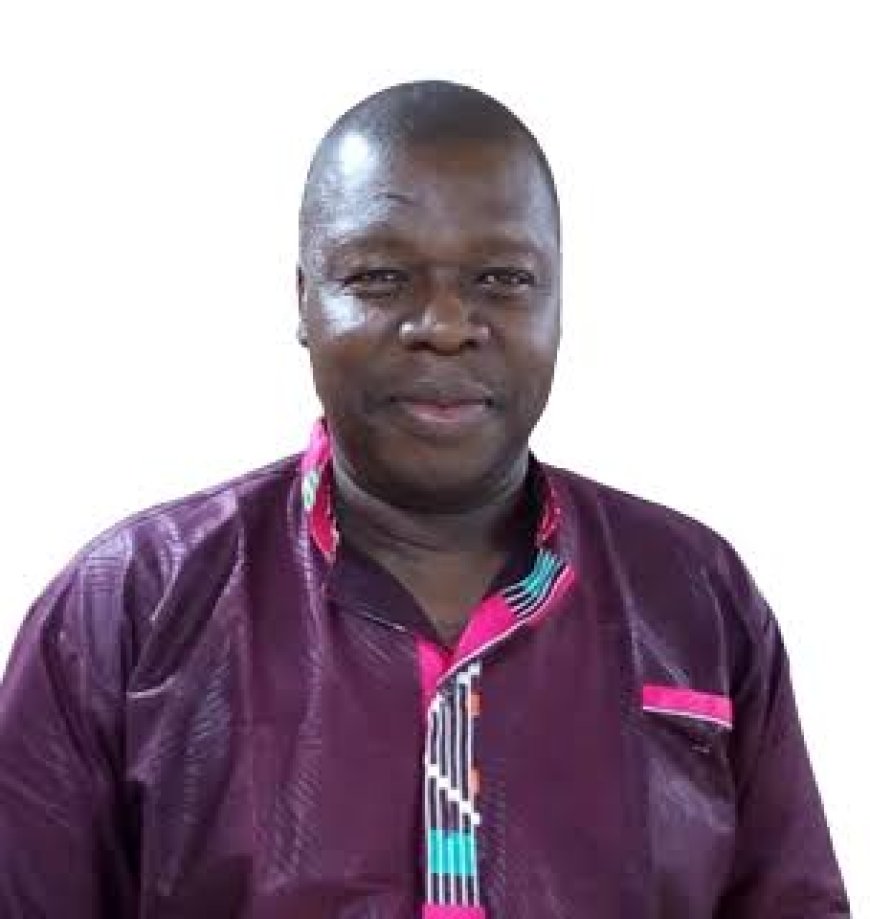
By Jackson Etwop-An activists and social commentator
Lira University stands today as the highest institution of learning in the Lango sub-region, boasting arguably the largest contiguous land mass of any public university in Uganda. Yet, its vast fields and architectural promise are currently overshadowed by an uncalled-for leadership gridlock between its top administrators: Vice Chancellor Prof. Jasper Ogwal Okeng and Deputy Vice Chancellor Assoc. Prof. Okaka Opio Dokotum. The ongoing institutional warfare—fought through leaked letters, arbitrary appointments, retracted delegations, and court injunctions—presents an abhorrent and deeply disappointing spectacle for a community that bled and begged to see this institution rise.
To watch highly credentialed academics, who should embody the pinnacle of reason and societal guidance, reduce a public sanctuary of knowledge into a personal battlefield is a bitter pill to swallow. As stakeholders, elders, and daughters and sons of Lango, we must look past individual egos and address this self-sabotage before it undoes decades of painful progress.
A History Born of Sacrifice and Stubborn Lessons
To understand why the current state of affairs is so tragic, we must revisit the historical roots of public higher education in our sub-region. For generations, Lango engaged in a metaphorical war over nothing—a political and social paralysis that ultimately contributed to the early educational dominance of Gulu University over Lira. Our internal bickering and lack of cohesive lobbying delayed the establishment of a fully functional public university in Lira.
When opportunity finally knocked, Lira University was born from humble beginnings as a constituent college of Gulu University in 2012, before gaining autonomy as a fully-fledged public university in 2015. The acquisition of its massive land expanse was a product of communal goodwill, local government sacrifice, and a collective dream that Lira should lead in health sciences, technology, and research.
Every acre of that land holds the aspirations of families who wanted their children to study from home, and local business owners who envisioned an economic engine. It was built to heal old wounds, not to create new battle lines.
The Illusion of Outside Intervention
The current degradation of this dream is a painful manifestation of leadership immaturity. Rather than utilizing internal conflict resolution mechanisms, the dispute over who acts in leadership roles and how council directives are executed has spilled into external arenas. We have witnessed appeals to the Inspectorate of Government (IGG), dragnet petitions to Statehouse, and legal actions resulting in the Chief Magistrate's Court issuing interim injunctions.
Let us speak the raw, unvarnished truth: courtrooms will never solve our cultural and institutional problems. The legal system is designed to produce a technical winner and a technical loser. In a university setting, a winner-takes-all verdict leaves behind a fractured staff, an alienated student body, and a toxic working environment.
Worse still, running to external entities like the IGG and Statehouse signals to the rest of Uganda that Lango leaders lack the emotional intelligence and cultural capacity to govern their own affairs. Every time we invite the central government or external judicial bodies to arbitrate our internal house rules, we actively surrender our autonomy and prove our detractors right.
The True Ownership of Lira University
The bottom line must be made explicitly clear to the warring factions: Lira University does not belong to Prof. Jasper Ogwal Okeng, nor does it belong to Assoc. Prof. Okaka Opio Dokotum. It does not belong to their respective camps, nor to any single administrative clique. It belongs to the public. It belongs to the taxpayers of Uganda and, most fundamentally, to the people of Lango who gave up their land and political capital to establish it.
The current standoff, characterized by the Vice Chancellor bypassing his immediate deputy to handpick an acting successor, and the subsequent Council revocations, is a administrative disaster that paralyzes decision-making. While top management is busy exchanging legal threats and media salvos, staffing deficits go unaddressed, student services suffer, and the institution's academic reputation is eroded. This is not leadership; it is institutional vandalism.
A Call for a Lango-Led Solution
Lango problems require a Lango solution, not a statehouse directive. We possess the cultural mechanisms, the intellectual capital, and the traditional structures necessary to bring our fighting sons to order.
We must convene one of the largest peace talks of our time—a comprehensive, transparent public hearing on the systemic and administrative issues affecting our university. We cannot afford to sit back and watch two elite academicians burn down the house we all built.
Therefore, this article serves as an urgent, clarion call to:
• The Lango Parliamentary Group (LPG) to step up, put aside partisan politics, and provide the legislative and political oversight required to steady the university.
• Academicians and Corporate Professionals from across the region to bring their institutional design expertise to rewrite the broken relationship frameworks at the campus.
• Influencers, Opinion Leaders, and Traditional Elders to exercise moral authority and demand accountability from both administrators.
The UTC Conference
We propose and demand an extraordinary stakeholder conference to be held at the Uganda Technical College (UTC) Lira, on a date to be set in the immediate coming weeks. This conference must serve as a neutral ground where the University Council, management, local leaders, and community elders sit facing each other—not as adversaries in a court of law, but as custodians of a shared legacy.
Prof. Ogwal Okeng and Assoc. Prof. Opio Dokotum must be reminded that history will judge them harshly if their primary legacy is the fracturing of Lira University. It is time to drop the legal armor, close the doors to external instigators, and sit on the mat of dialogue. Let us fix our own house before outsiders do it for us, for when the smoke clears from an uncalled-for fight, it is the grass—our students and our community—that suffers most.
-ENDS-
The writer is the Executive Director of Tok-Power-a civil society organisation headquartered in Lira city,he is also a socio-political commentator, reach him on :
Aduku2000@yahoo.com