

Laroma Probes Why Northern Uganda Farmers Fail to Profit from Quality Produce.
The investigation seeks to establish why farmers continue to record losses after producing quality food crops,with the company identifying poor market access, low prices,weak post-harvest handling, drought ,inadequate quality control and limited participation in cooperatives among the major challenges affecting farmers.
 Regina Lalam Olal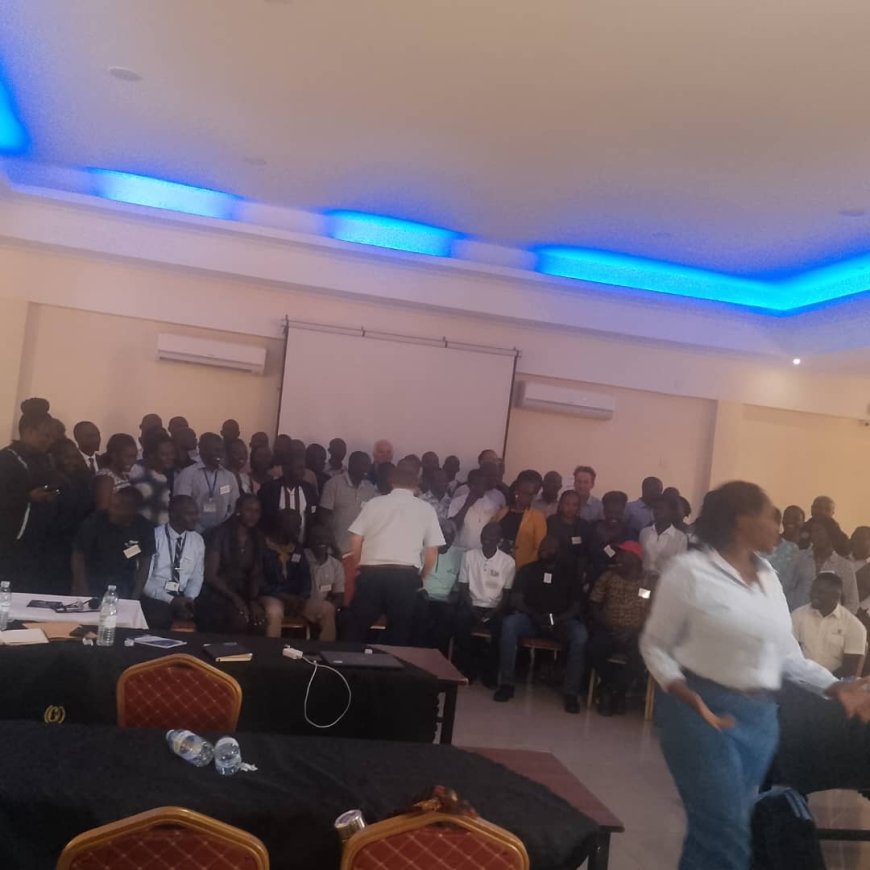
By Hillary Opio Omara
LIRA CITY LANGO- The Company of Laroma,in partnership with Access for Innovation,has launched an investigation into the factors preventing farmers in Northern Uganda,particularly the Lango Sub-region,from benefiting fully from quality agricultural produce despite producing crops on a large scale.
The investigation seeks to establish why farmers continue to record losses after producing quality food crops,with the company identifying poor market access, low prices,weak post-harvest handling, drought ,inadequate quality control and limited participation in cooperatives among the major challenges affecting farmers.
Speaking during a two day meeting organised by the Company of Laroma in partnership with Access for Innovation at Margarita Palace Hotel in Lira City on Wednesday,August 26,2026,Sam Acuti,the Manager of the Company of Laroma in Lira City,said the company had conducted research to understand why farmers in Northern Uganda,especially Lango,are not earning sufficient returns from their agricultural produce.
Acuti said the findings showed that farmers are producing food crops in large quantities, but many are unable to secure profitable markets.
He attributed the losses to several factors, including farmers selling their produce at very low prices,poor-quality produce reaching markets,challenges in supplying produces outside Uganda such as South Sudan,the Democratic Republic of Congo and Kenya,poor post-harvest handling,and the limited involvement of farmers in cooperatives. According to Acuti,the Company of Laroma now intends to strengthen the purchase of agricultural produce from farmers at better prices while working through cooperatives to create a more reliable market for their produce.

Sam Acuti Company's Manager Laroma farmers Association
He said the company is targeting about 14 cooperatives across Lango and Northern Uganda as part of efforts to organise farmers,improve aggregation and strengthen their bargaining power in the market.
Meanwhile,Victoria Kokunda,who works with the Company of Laroma,said the company is also partnering with Access for Innovation to promote the use of fertilisers that can improve soil productivity and help farmers increase yields.
Kokunda said the fertilisers are intended to address challenges associated with declining soil fertility and reduce farmers' reliance on low-quality agricultural inputs that may affect crop production .

Victoria Kokunda Staff at Laroma
She encouraged farmers to adopt better farming practices and appropriate agricultural inputs to improve both the quantity and quality of their produce.
John Magnay,Senior Strategic Advisor at Access for Innovation,said the initiative would not stop at the meeting but would continue with practical interventions aimed at improving agricultural production and marketing in Lira and the wider region.
Magnay urged farmers organised under cooperatives to work together,saying collective action can help them maintain the quality of their produce,negotiate better prices and access larger markets.

John Magnay
He added that the company will build a seed-drying machine in Lira City to help farmers dry their seeds properly and improve the quality of their produce.
The engagement brought together agricultural stakeholders and farmers in Lira City,with participants discussing ways of improving agricultural production, post-harvest handling,collective marketing and access to better markets.
The initiative is expected to strengthen cooperation between farmers,cooperatives, agricultural input providers and buyers in an effort to reduce post-harvest losses and ensure that farmers in Northern Uganda earn better returns from their agricultural investments.